Easy On Easy Off Dog Harness that Actually Fits
Share
If you have ever tried to gear up a dog who is vibrating with anticipation at the door, you already know the problem: complicated straps turn “let’s go” into a wrestling match. When you are training, running, or managing a busy trailhead, an easy on easy off dog harness is not a convenience feature. It is a handling feature. The right design keeps your dog comfortable at speed, keeps you in control in public, and reduces the chance you skip the harness altogether because it is a hassle.
What “easy on, easy off” should mean in the real world
Easy should not mean “sloppy.” Plenty of harnesses go on quickly because they barely do anything once they are on. For active dogs, the goal is fast donning without sacrificing stability, range of motion, or safety.
A truly easy-on harness lets you suit up in seconds without forcing your dog to step through tiny holes or threading a maze of webbing. It also comes off quickly without dragging buckles over ears or catching fur. That matters after a muddy run, in the dark at the end of a winter walk, or when your dog is over-threshold and you need to reset calmly.
The other half of the definition is repeatability. If you can’t put it on the same way every time, fit drifts. Drift leads to chafing, shoulder restriction, and “mystery pulling” that is really just an unstable harness rotating under pressure.
The performance trade-off: speed vs. stability
It depends on your dog’s build and your activity. Standard minimalist, fast-on harnesses can be fine for short neighborhood walks with low distraction. For hiking, scentwork, or any dog sport where your dog accelerates, turns, and loads the leash, you want a harness that stays planted.
Stability usually comes from three things: a design that sits behind the shoulder, a secure girth strap placement that doesn’t creep forward, and materials that don’t slide when tension changes. The good news is you do not have to give up speed to get stability. You just have to know what to look for.
The easiest designs to use (and when each makes sense)
Over-the-head, buckle-at-the-girth
This is often the sweet spot for active owners. You slip the neck opening over the head, bring the body strap under the ribcage, and click one or two buckles. It is fast and consistent.
The key is a neck opening that is shaped and sized correctly. Too tight and your dog braces when you pull it over. Too loose and the harness can yaw side to side on turns.
Step-in harnesses
Step-in styles avoid going over the head, which some dogs prefer. The trade-off is that you are asking your dog to place feet precisely into loops. That is not “easy” for dogs who are excited, elderly, or sensitive about paw handling.
For high-movement activities, step-in harnesses are also more likely to shift if the front geometry sits too close to the shoulder joint.
Fully adjustable multi-strap harnesses
These can fit a wide range of bodies, but they are rarely the fastest. More straps mean more potential for mis-adjustment, and it is easy to end up with uneven tension side-to-side.
If you choose this type, set it once, mark your strap lengths, and resist the urge to keep “tweaking” every outing.
Fit: the difference between “easy” and “easy plus safe”
An easy on easy off dog harness still has to do its job under load. Here is what to check when you evaluate fit.
Neck and chest placement
You want the front of the harness to sit in a way that avoids the throat. A no-choke fit means leash pressure is distributed across the chest and body, not concentrated at the airway.
Also watch the shoulder. If the harness sits on top of the shoulder blade, your dog will shorten stride or develop rub spots. For running and hiking, shoulder freedom is not optional.
Girth strap location
The girth strap should sit behind the front legs, not in the armpit. Too far forward causes chafing and can change your dog’s gait. Too far back and the harness can shift when your dog pulls or pivots.
Padding on the girth strap matters more than most people realize. That strap is where motion and friction live, especially when your dog is wet or the trail is sandy.
Snug but not restrictive
You should be able to slide two fingers under straps in most areas, but that rule is a starting point, not a guarantee. A deep-chested dog may need a snugger fit to prevent rotation. A stockier dog may need more clearance to avoid pressure points.
If your harness “seems fine” until your dog hits the end of the leash and the whole thing twists, it is not fine. Easy-on is only a win if it stays aligned when your dog surges.
Comfort features that matter after mile three
Short walks hide problems. Distance exposes them. If you run, hike, or train at speed, pay attention to these comfort details.
Full padding is not fluff. Padding reduces point pressure and helps prevent hot spots, especially where straps cross muscle groups that flex repeatedly. Look closely at the underbody and girth areas, not just the chest panel.
Materials should also manage moisture. A harness that stays soggy against the coat can create friction. If your dog swims, dock dives, or works in wet grass, you want gear that does not turn into a sandpaper belt once grit gets involved.
Finally, consider buckle placement. Buckles that land right behind the elbow can rub with every step. Buckles positioned away from high-motion zones make the harness feel “invisible” to the dog.
Control: what “humane handling” looks like in a harness
A harness should help you guide a dog without choking, but it should not encourage constant pressure. For training, you want the option to reward slack leash and regain attention without escalating force.
Back-clip attachment points are common and comfortable for steady runners and hikers. They also keep the leash line clean over the spine. Front-clip options can be useful for dogs learning leash manners, but they can change gait if used as a constant steering wheel. Many active owners prefer a harness that supports both so you can match the setup to the session.
If your dog is powerful or reactive, ease-of-use becomes a safety feature for you, too. Being able to gear up quickly and correctly reduces the chance of a fumbled clip in a parking lot or at a busy trail entrance.
Reflective visibility is not optional for real mileage
If you are out early, out late, or walking roadside even occasionally, reflective elements are basic safety equipment. High-contrast reflective strips or panels help drivers and cyclists detect motion and distance earlier.
The detail to look for is placement. Reflective features should be visible from multiple angles, not just a small patch on the back that disappears when the leash drapes over it.
Getting the size right without trial-and-error
Most harness frustration comes down to sizing. “Easy on easy off” becomes “easy on, constant readjusting” when the measurements are off.
Measure your dog’s girth at the widest part of the ribcage, typically about 1.5" to 2" behind the front legs. If your dog is between sizes, the right choice depends on body type and coat. Thick-coated dogs often need more room, while sleek, deep-chested dogs may do better sizing down if the design allows full shoulder clearance.
If you are buying online, choose a brand that makes sizing a decision-support tool, not a guessing game. ComfortFlexStore, for example, leans into fit and performance with a dedicated sizing guide and harness designs built for active movement, with full padding and reflective safety features you can actually use on the road or trail:
Making any harness faster to put on (without cutting corners)
Even a good harness can feel slow if your routine is messy. Build a repeatable process.
Store the harness pre-adjusted and pre-clipped in the shape you put on your dog. If your harness is an over-the-head style, keep the neck opening ready and the girth strap opened to the same side every time so your hands do not hunt for the buckle.
Teach a simple “nose through” or “head in” cue with rewards, then a brief stand-stay while you buckle. That turns harnessing into a predictable behavior chain instead of a chase sequence. For step-in harnesses, train a two-paw target or a “step” cue on a mat so your dog understands the job.
If your dog dislikes going over the head, do not force it. Try a different style, or desensitize gradually with short, calm repetitions. “Easy” should apply to your dog’s experience, not just your hands.
Quick red flags that mean the harness is not the right one
If you see hair loss behind the elbows, the girth strap is likely too far forward or not padded enough. If your dog’s stride shortens or the front legs look “choppy,” the harness is probably sitting on the shoulder. If the harness rotates when your dog hits the end of the leash, the fit is too loose, the geometry is off for your dog’s build, or both.
And if you dread putting it on, that is data. The best harness is the one you will use consistently because it is comfortable, stable, and genuinely fast to gear up.
The ComfortFlex Difference: Solving the Core Problems
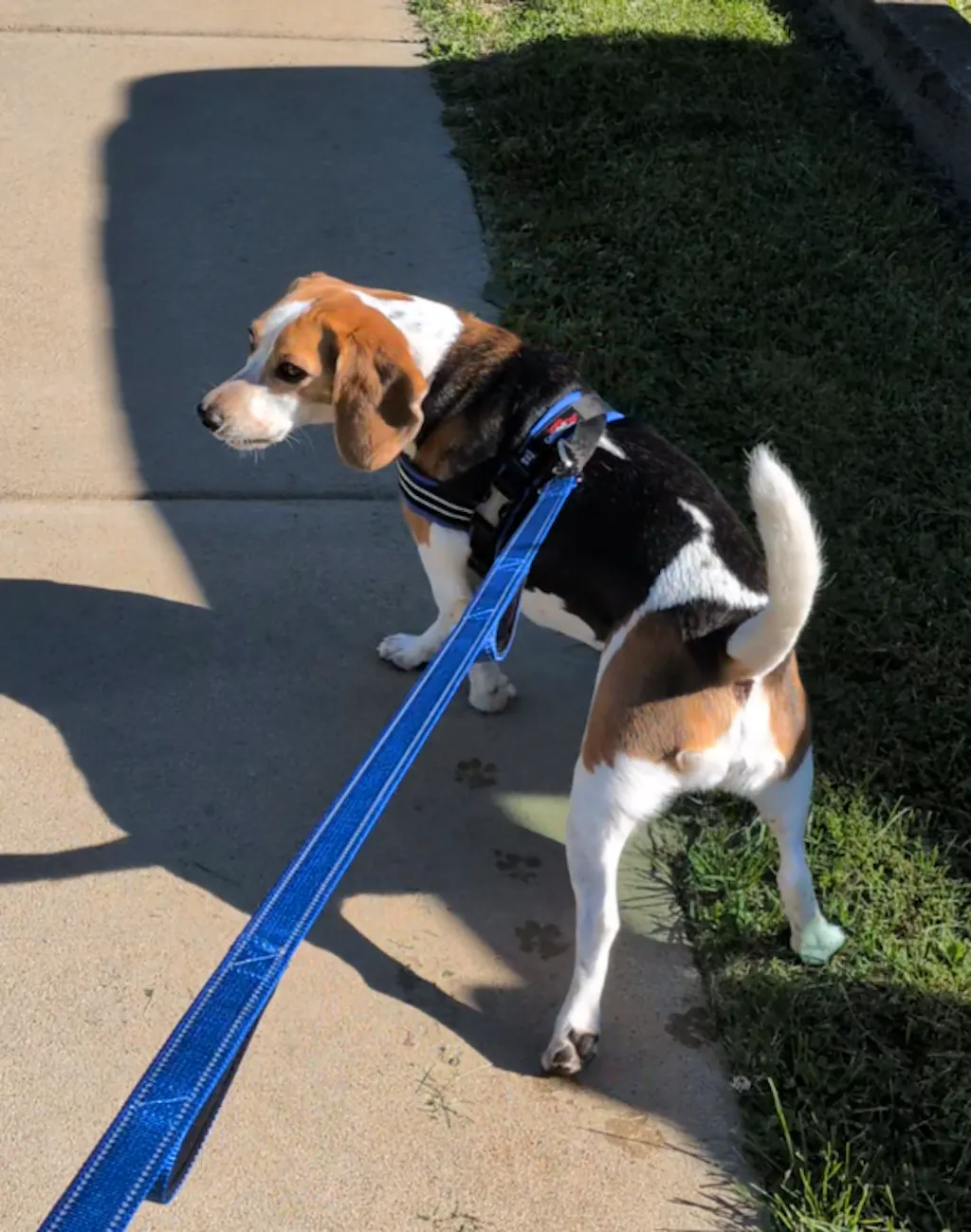
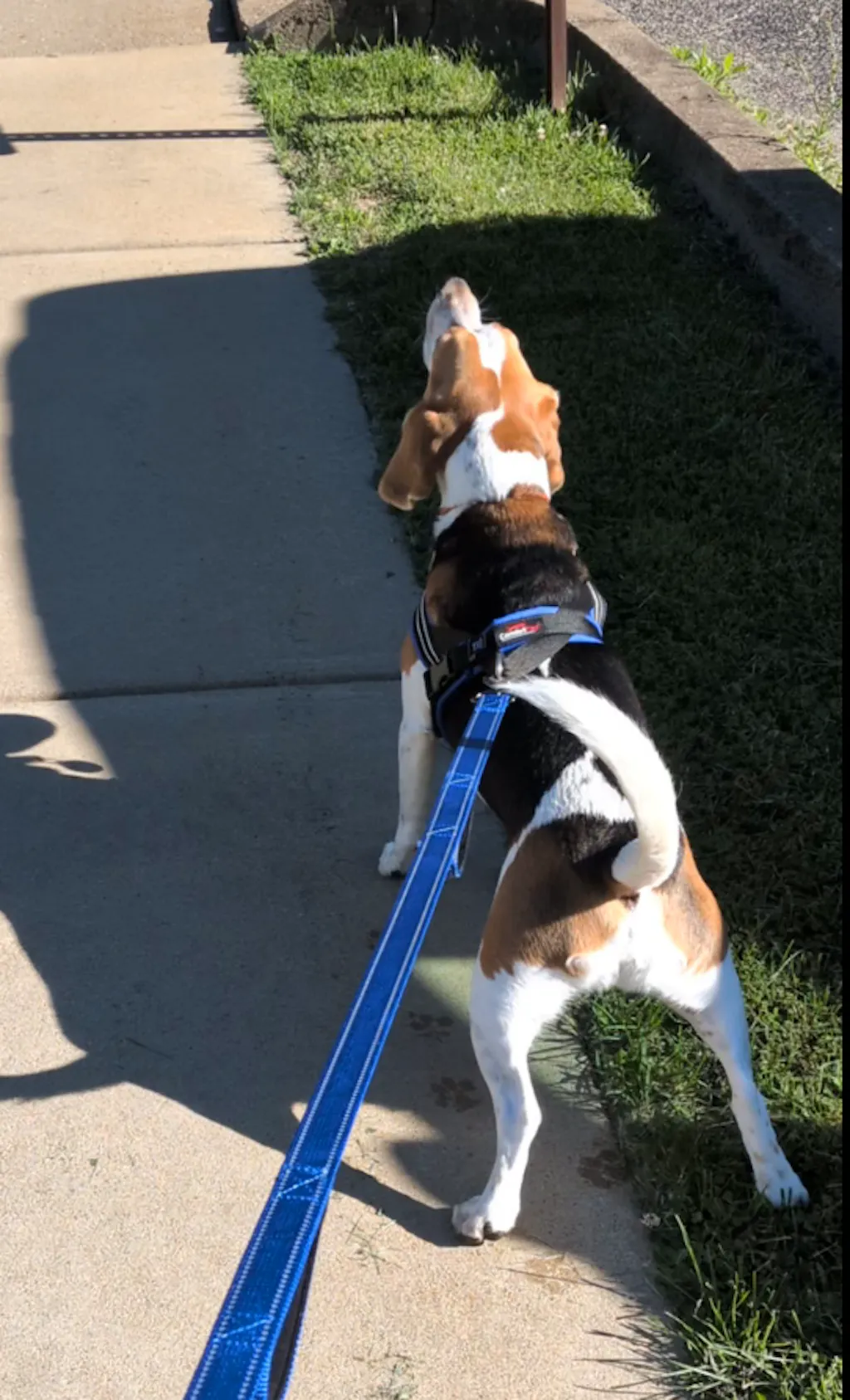
Most harnesses make you choose between "easy-on" and "high-performance." The ComfortFlex Sport Harness was specifically engineered to solve the common problems that "distance exposes" and "short walks hide."
Total Padding, Zero Compromise: Unlike the vast majority of harnesses that rely on thin, unpadded webbing, the ComfortFlex is fully padded throughout its entire construction. This continuous, lightweight, abrasion-free padding protects your dog’s skin from every angle, preventing underarm irritation and hot spots even during high-intensity activities like scentwork, flyball, or trail running.
Single-Buckle Security with Velcro Precision: Efficiency is baked into the design. The harness uses a high-strength Velcro closure on the girth strap for a customized, snug fit, backed up by a single safety buckle. This allows for a "set it and forget it" adjustment that remains consistent every time you suit up, whether you’re at the start line or the trailhead.
Intelligent Buckle Placement: The single buckle is strategically positioned high on the side of the dog’s body, far above the elbow joint. This design choice is vital; it eliminates the painful rubbing and interference that occurs with every stride in harnesses where buckles sit too low and strike the leg.
Waterproof & Quick-Dry Materials: The harness is built from water-resistant fabric that refuses to soak up moisture like heavy mesh or spongey foams. This prevents the gear from becoming heavy and soggy after a rainy walk or a wet session in the field, and it helps stop the "sandpaper effect" of trapped grit against the skin.
The Sliding Leash Connection: One of our most technical features is the ring that slides along the back handle. This allows the leash to move dynamically as your dog changes direction—essential for the lateral movements in scentwork—without the harness shifting, rotating, or pulling into the throat. Pressure stays centered on the chest, where it belongs.
The result is a secure, stable fit that stays "invisible" to the dog while remaining incredibly simple for the owner to manage. You can find the right fit for your dog using the official ComfortFlex Sizing Guide.
A good easy on easy off dog harness should feel like part of your handling system, not an extra step. When you find the right fit, you stop thinking about straps and start focusing on the work - the miles, the training reps, the safe control in public, and the kind of movement your dog was built for.