Small Breed vs. Large Breed: Navigating Tracheal Health and Gear Safety
Share
For dog owners, the "no-choke" promise is more than a marketing slogan—it is a physiological necessity. However, the reasons why a dog’s airway is at risk differ significantly depending on the size and breed of the animal. Understanding the specific vulnerabilities of small vs. large breeds is the first step in choosing gear that protects their ability to breathe.
The Anatomy of the Airway
The canine trachea is a flexible tube held open by C-shaped rings of cartilage. These rings ensure that even when a dog is panting, sniffing, or running, the airway remains patent (open).
Related: For a deeper dive into the mechanical causes of airway distress, see our guide on The Anatomy of the Canine Airway: Why Chest-Strap Design Matters.
Small Breeds: The Risk of Tracheal Collapse
In small and "toy" breeds—most notably Pugs, Yorkies, Pomeranians, and Chihuahuas—the primary concern is Tracheal Collapse. This is a chronic, progressive condition where the tracheal cartilage rings lose their rigidity and begin to soften.
- The "Slipping" Ring: In these dogs, the C-shaped rings eventually flatten or lose their arch. When the dog inhales deeply or pulls against a collar, the airway can narrow or shut entirely, leading to the characteristic "goose-honk" cough.
- The Weight Factor: Small breeds have less muscle and soft tissue surrounding the trachea to act as a natural buffer.
- The Gear Solution: For these dogs, a collar should only ever be used for identification. A harness with a dropped-chest design is essential. By moving the pressure point away from the neck and onto the prosternum (the boney part of the chest), you ensure that no force is ever applied to the vulnerable airway.
Further Reading: The Best Harness for Pugs: Protecting Tracheal Health
Large Breeds: The Risk of Blunt Force Trauma
Large breeds like Labradors, German Shepherds, and Golden Retrievers rarely suffer from the genetic softening of tracheal rings seen in small dogs. Instead, their tracheal concerns are usually the result of Blunt Force Trauma or Laryngeal Paralysis.
- Sudden Impact: Because large dogs have more mass, a sudden "lunge" at the end of a leash generates massive kinetic energy. If that dog is wearing a standard collar or a high-neck harness, that energy is focused directly on the throat, which can bruise the airway or damage the thyroid gland.
- Laryngeal Paralysis (GOLPP): Common in older large breeds, this condition affects the "flap" (larynx) that protects the airway during swallowing. Dogs with this condition struggle to cool themselves down and are highly sensitive to any neck constriction.
- The Gear Solution: For large dogs, the goal is distribution of force. A harness must have a wide, padded girth strap and a design that prevents the chest strap from "riding up" into the soft tissue of the throat when the dog is in motion.
Critical for Safety: Getting the Right Fit
A "no-choke" harness only works if it is sized correctly. If a harness is too large, the chest strap can shift upward during a walk, landing directly on the trachea. If it is too small, it can restrict the natural movement of the shoulders.
How to Measure for Tracheal Safety:
- The Girth Measurement: Measure around the widest part of your dog's ribcage, typically 1.5" to 2" behind the front legs.
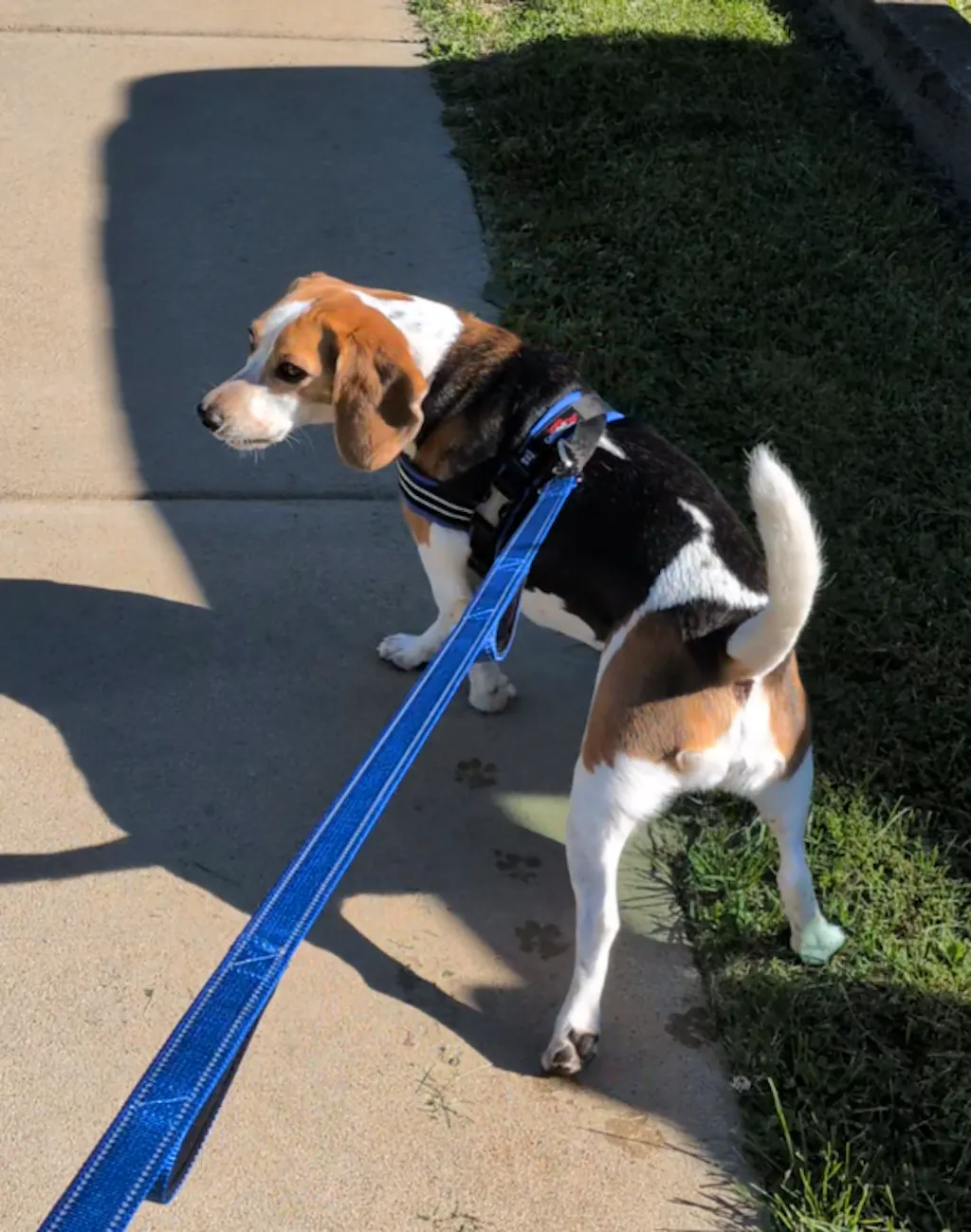
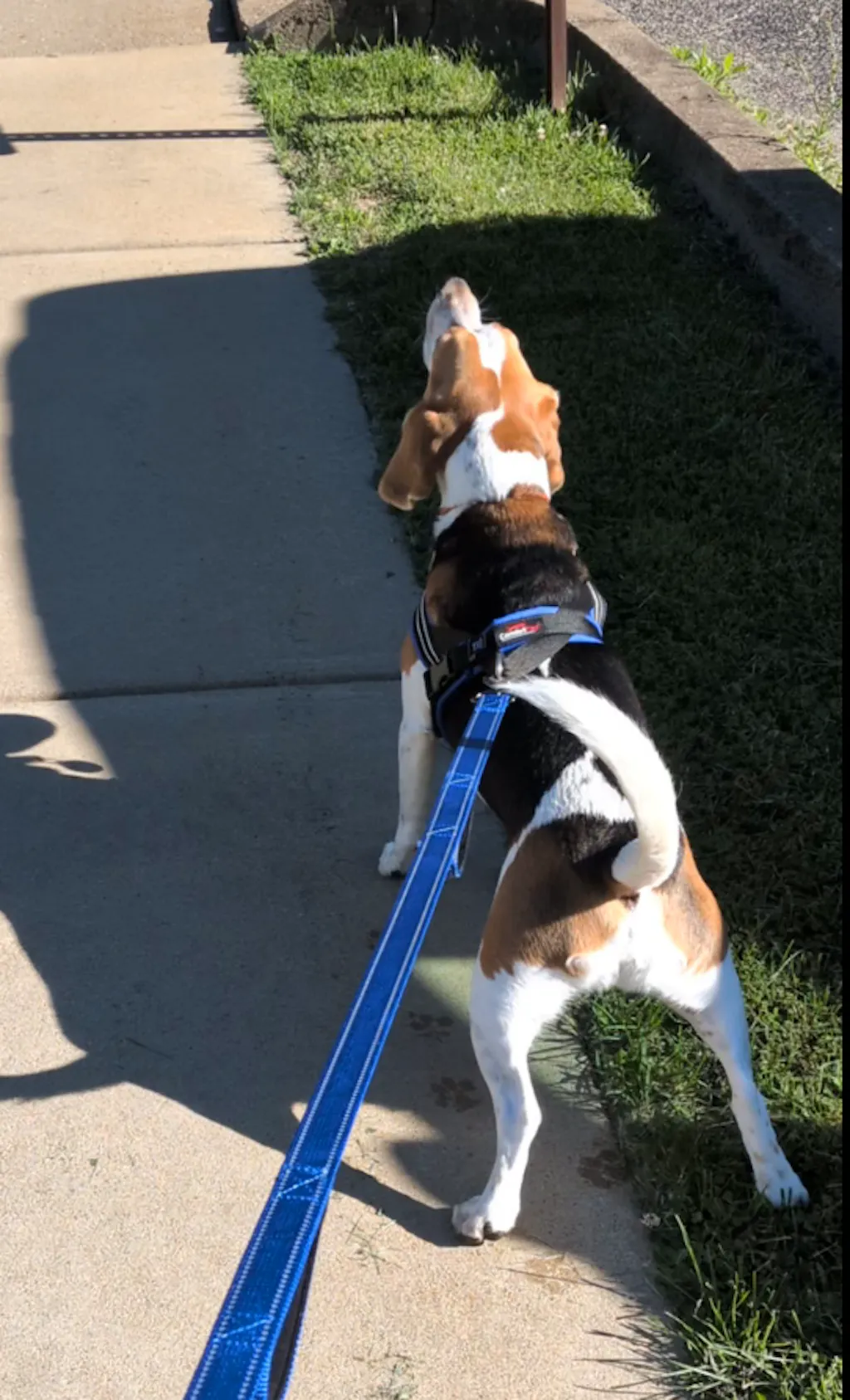
- The ComfortFlex Target: The horizontal strap should rest directly against the prosternum (the boney prominence of the chest). This is technically below the neck entirely. By anchoring here, the harness uses the skeletal structure of the chest to take the force, leaving the entire neck and "V" of the throat completely open.
- The "Two-Finger" Rule: Once buckled, you should fit two fingers under the straps. This ensures the harness won't shift while allowing full lung expansion.
Note: If your dog is between sizes, we generally recommend sizing down unless your breed is deep chested.
The "Prosternum Anchor": Why Design Matters
Regardless of size, the key to tracheal safety lies in where the harness "anchors" on the dog’s body. This is the critical mechanical factor discussed in our comprehensive guide to tracheal problems in dogs.
- The Tracheal Safety Zone: The area at the base of the neck where the windpipe enters the chest is the "danger zone." Quality gear is designed to sit below this point.
- The Prosternum Anchor: The harness should utilize the prosternum—the strongest point of the canine skeletal front—to absorb the weight of the dog.
- Stability in Motion: Many harnesses fit well while the dog is standing still but "choke up" as soon as the dog starts to run. This is known as kinetic shearing. A stable, Norwegian-style design helps the gear stay in place, maintaining the safety gap between the harness and the airway.
Why Buy ComfortFlex Direct: The "Risk-Free" Direct Advantage
Risk-Free Domestic Shopping:
Every US order ships Free and includes a prepaid return label in the box. If the fit isn't perfect or you or your dog aren't completely happy, exchanging for a different size, color or refund is effortless.
Fast Factory Processing:
Every ComfortFlex harness and collar is designed, cut, assembled and sewn in Upstate New York. We ship every order the same day or the following business day.
$7.00 Flat-Rate International:
Simple, transparent shipping to any dog athlete worldwide.
Guaranteed Fresh Inventory:
Unlike the big box platforms, we are rarely out of any color or size so you can always get any of our 11 vibrant colors or 2 patriotic patterns in all 10 available sizes.
Maximum Savings:
Big-box retailers charge high fees to list on their sites. By buying direct, those savings stay with you. Stack our Bundle Discounts with our First-Time Subscriber offer to save up to 30%.
Harness + Collar Performance Combo
SAVE UP TO 30% TOTAL
15% Bundle Discount + 15% Pack Member Discount
Free US Shipping | Prepaid Return Label Included